


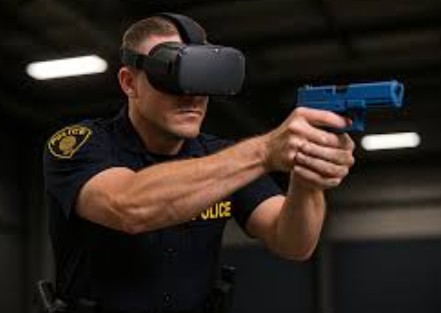
Effective law enforcement training requires more than simply teaching procedures and policies. Officers must be able to apply knowledge in dynamic situations, communicate effectively under pressure, assess risks, make informed decisions, and adapt to rapidly changing circumstances. While traditional training methods continue to play a critical role in preparing personnel, agencies are increasingly exploring technologies that enhance learning and improve long-term performance. A law enforcement virtual reality training system has become an important tool in this effort, providing immersive experiences that support scenario-based learning while helping officers retain critical skills throughout their careers.
One of the biggest challenges facing any training programme is ensuring that information learned during instruction remains accessible when needed in real-world situations. It is one thing to understand a concept in a classroom environment and quite another to apply that knowledge effectively during a high-pressure encounter. Skill retention depends heavily on repetition, practice, and meaningful engagement with training material.
Virtual reality addresses these challenges by allowing participants to move beyond passive learning and actively engage with realistic scenarios. Rather than simply discussing what they might do in a given situation, officers can enter immersive environments where they must assess conditions, make decisions, and experience the outcomes of their actions. This active participation strengthens learning and creates experiences that are often easier to remember than traditional instructional methods alone.
Scenario-based learning has long been recognised as one of the most effective ways to prepare law enforcement professionals. Real-world situations rarely unfold according to a script. Officers must often interpret incomplete information, respond to unexpected developments, and balance multiple priorities simultaneously. Training that reflects these realities helps develop practical skills that are directly applicable to operational duties.
A law enforcement virtual reality training system creates opportunities to simulate these types of situations with a level of realism that is difficult to achieve in many traditional settings. Participants may find themselves navigating interactions in residential areas, responding to incidents in public spaces, conducting investigations, or managing situations involving heightened emotions. These environments encourage active problem-solving and decision-making while maintaining a safe and controlled learning space.
One of the key strengths of virtual reality is immersion. When individuals feel as though they are genuinely present within a scenario, their responses tend to become more natural and authentic. This sense of presence encourages participants to engage fully with the situation rather than viewing it as a theoretical exercise.
Immersive experiences often create stronger memories than passive learning activities because participants are actively involved in the process. They are required to observe, think, communicate, and act rather than simply absorb information. This engagement plays an important role in improving retention and helping lessons remain accessible long after training has concluded.
Repetition is another factor that contributes to skill retention. Many law enforcement skills require regular practice to remain sharp. However, logistical limitations sometimes make it difficult to conduct frequent live exercises. Virtual reality systems provide an efficient way to revisit important concepts and reinforce learning without requiring extensive resources or large-scale training events.
Officers can engage with scenarios repeatedly, refining their responses and building confidence through practice. This repeated exposure strengthens neural pathways associated with specific skills and helps transform knowledge into practical competence. Over time, these experiences contribute to stronger retention and more reliable performance.
Decision-making is one area where repeated scenario-based practice can have a particularly meaningful impact. Officers are often required to make judgments quickly while considering safety, legal requirements, departmental policies, and community interactions. Developing this ability requires more than theoretical understanding; it requires practical experience applying knowledge in realistic contexts.
A law enforcement virtual reality training system provides opportunities to encounter diverse situations that challenge participants to think critically and make decisions under varying conditions. By practising these skills repeatedly, officers can develop greater confidence and familiarity with the decision-making process itself.
Communication skills also benefit from immersive training experiences. Many law enforcement encounters depend heavily on effective communication, whether gathering information, de-escalating tensions, providing instructions, or engaging with members of the public. Strong communication can influence outcomes significantly and often determines how situations unfold.
Virtual scenarios frequently include interactive characters who respond to participant actions and verbal interactions. Officers must listen carefully, interpret information, and choose appropriate communication strategies while managing the overall situation. These experiences help reinforce communication techniques and encourage continuous improvement.
Situational awareness is another critical skill supported by scenario-based learning. Effective officers must observe their surroundings, recognise potential risks, monitor changing conditions, and maintain awareness of multiple factors simultaneously. Developing this awareness requires practice in environments that closely resemble operational realities.
Virtual reality allows participants to experience scenarios where attention to detail matters. By repeatedly engaging in exercises that require observation and assessment, officers strengthen their ability to process information efficiently and respond appropriately to emerging circumstances.
Another advantage of virtual reality training is the ability to expose participants to a broad range of scenarios. Certain incidents occur infrequently in daily operations but still require preparedness. Traditional training may not always provide opportunities to practise these situations regularly.
A law enforcement virtual reality training system allows agencies to introduce officers to a wider variety of experiences than they might encounter during routine duties. This broader exposure contributes to more comprehensive skill development while helping ensure that important lessons remain relevant and accessible.
Feedback plays an essential role in learning and retention as well. Many virtual reality systems allow instructors and participants to review performance after completing a scenario. Decisions, communication choices, observations, and procedural actions can be examined in detail to identify strengths and areas for improvement.
This review process encourages reflection and reinforces key learning points. Rather than simply completing an exercise and moving on, participants can analyse their responses and gain a deeper understanding of how their actions influenced outcomes. These insights often strengthen retention by connecting learning directly to personal experience.
Consistency is another benefit that supports long-term learning. Traditional scenario-based exercises can vary depending on instructors, role players, facilities, and other factors. Virtual reality systems provide more standardised experiences, allowing participants to encounter similar learning opportunities regardless of location or scheduling constraints.
This consistency helps reinforce core concepts while ensuring that officers receive comparable training experiences throughout their careers. Standardised training also supports organisational efforts to maintain common performance expectations and professional standards.
The flexibility of virtual reality technology allows agencies to adapt training content as operational needs evolve. New scenarios can be introduced to reflect emerging challenges, policy changes, or community priorities. This adaptability helps ensure that training remains relevant while continuing to reinforce critical skills over time.
Professional development does not end after academy training. Officers must continually refine their abilities as responsibilities change and new challenges emerge. Skill retention therefore becomes an ongoing process rather than a one-time objective. Virtual reality systems support this long-term development by providing accessible opportunities for continuous practice and learning.
A law enforcement virtual reality training system offers a powerful combination of immersion, repetition, feedback, and flexibility that enhances both scenario-based learning and long-term skill retention. By allowing officers to engage actively with realistic situations, these systems create meaningful learning experiences that extend beyond traditional instruction.
As agencies continue seeking effective ways to prepare personnel for increasingly complex responsibilities, virtual reality technology is becoming an important component of modern training strategies. Through immersive scenarios and ongoing reinforcement, these systems help ensure that critical skills remain sharp, relevant, and ready to be applied when they matter most.


