

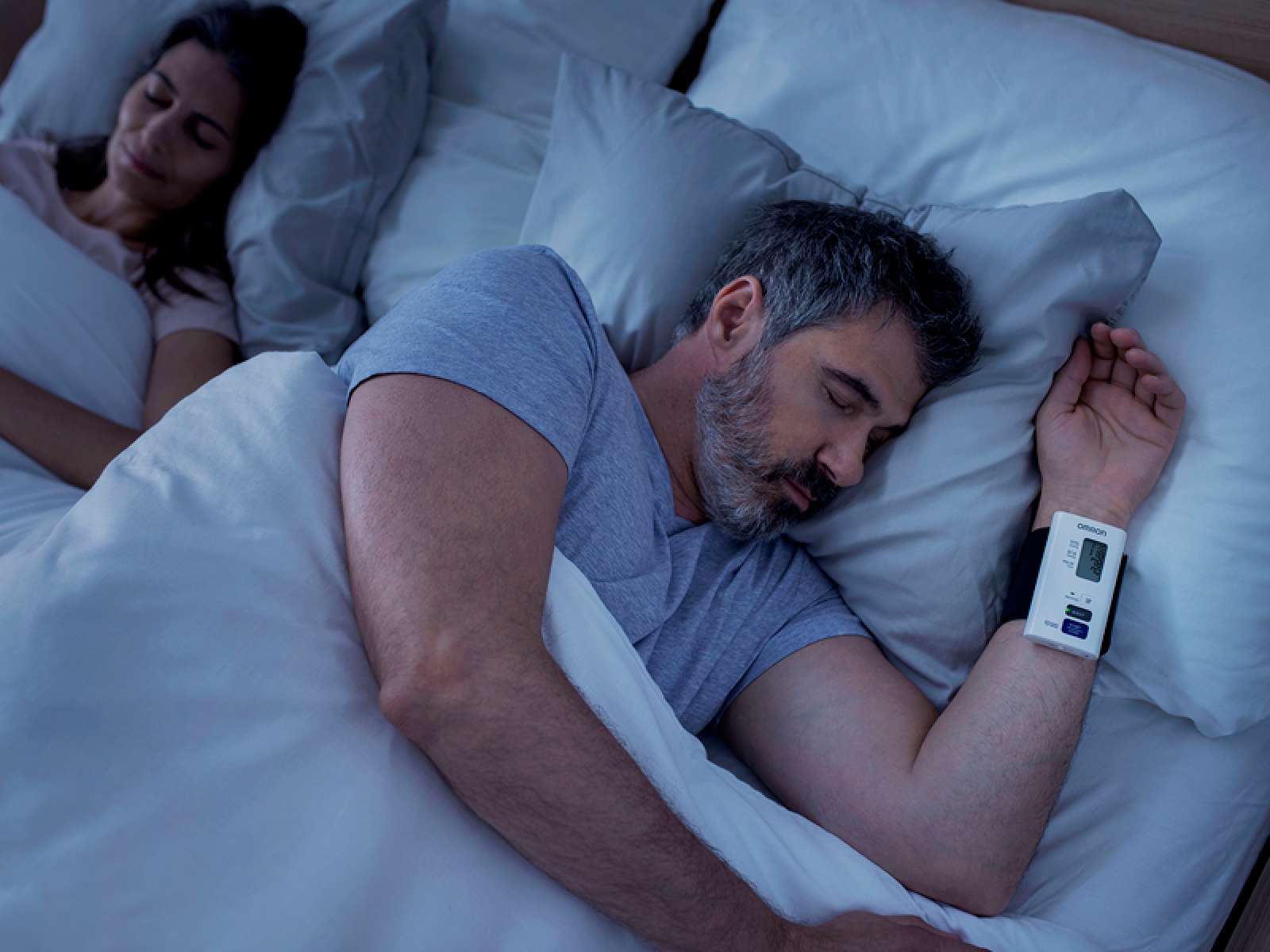
Daytime blood pressure gets most of the attention, but some of the most informative cardiovascular moments happen after midnight. Healthy sleep brings a predictable fall in pressure — the night-time dip that gives blood vessels their daily rest. When that dip shrinks or disappears, cardiovascular risk climbs quietly, and only overnight measurement can see it happen.
What Happens Overnight
During deep sleep, the nervous system shifts toward its restorative branch: heart rate slows, vessels relax, and pressure typically falls ten to twenty per cent below daytime levels. The body uses these hours for maintenance — vascular repair, hormonal reset, memory consolidation. The pressure dip is both a sign of that maintenance and part of its machinery.
Anything that fragments sleep — stress, alcohol, late screens, untreated snoring — tends to blunt the dip. The sleeper notices only tiredness; the cardiovascular system notices lost rest. Over months and years, the difference between a dipping and a non-dipping night is one of the stronger predictors hidden in routine data.
The Night-Time Dip That Matters
Seeing the dip requires measuring through the night, which historically meant an ambulatory recorder inflating a cuff hourly and disturbing the very sleep it measured. Wrist-based overnight monitoring changes the equation: a slim blood pressure smartwatch can capture scheduled night readings with far less disruption, building a night-time profile across ordinary weeks rather than one clinical night.
The practical questions it answers are concrete. Is pressure falling as it should? Do late nights show a different pattern than early ones? Does a stressful week echo into the small hours? These are questions a person can act on — and ones a doctor can use, since night-time behaviour increasingly informs treatment timing and intensity.
Stress Echoes Into Sleep
The day’s emotional weather rarely ends at bedtime. Anxious periods raise night-time pressure and heart rate, lighten deep sleep and shorten its most restorative stages. Modern wearables read the proxies — heart rate variability, sleep staging, breathing regularity — and some now attempt to map emotional state itself, giving language to the stress that would otherwise be felt but not seen.
None of this replaces professional assessment, but it reframes evenings. A relaxation routine stops being a wellness platitude and becomes a measurable intervention: try ten minutes of slow breathing before bed for a fortnight, and let the night data report whether anything changed.
Reading Morning Readings in Context
The first reading of the day arrives loaded with the night before it. A poor night elevates morning pressure reliably enough that interpreting any single morning number without sleep context invites error. Pairing the two — sleep quality beside the morning measurement — turns confusion into explanation.
This pairing also prevents overreaction. A high reading after a fractured night calls for sleep repair, not panic; a high reading after excellent sleep carries different weight. Wearers who learn this distinction stop fearing their morning numbers and start using them.
Repairing the Night
Sleep advice becomes effective when it is specific and measured. Consistent bedtimes matter more than occasional early nights; alcohol within hours of sleep reliably steals more deep sleep than it grants drowsiness; a cool, dark room shows up in the data within days. Each of these is testable at home, with results visible on the wrist by the end of the week.
The feedback loop is the point. Sleep hygiene advice has existed for decades; what was missing was the nightly receipt showing whether it worked. With that receipt, people persist — and persistence is what moves night-time blood pressure.
Snoring, Apnoea and the Unseen Strain
No discussion of night-time blood pressure is complete without sleep-disordered breathing. Repeated pauses in breathing strain the cardiovascular system dozens of times an hour, flattening the night-time dip and elevating morning pressure — often in people who simply think they snore. It is among the most common and most under-diagnosed drivers of stubborn hypertension.
Wearables cannot diagnose the condition, but they can point toward it: fragmented sleep architecture, night readings that refuse to settle, morning pressure that stays high despite good habits. That pattern is worth raising with a professional, because treating the breathing problem often improves the pressure problem. The wrist data starts a conversation that symptoms alone rarely begin.
Households play a quiet diagnostic role here. A partner who notices pauses in breathing, choking sounds or nightly restlessness holds information the sleeper cannot supply, and sharing that observation alongside the wrist data gives a professional exactly the starting point needed. Many treatment journeys toward calmer nights and lower morning readings begin with precisely that combination — an observation from across the pillow and a trend line from across the room.
Waking Up Better Informed
Morning by morning, the combination of sleep data and pressure readings composes a picture no daytime routine can supply: how the body recovers, what disrupts that recovery, and which repairs actually help. For anyone serious about cardiovascular health, the night is no longer a blind spot. A blood pressure smartwatch that works through the small hours turns eight unmeasured hours into some of the most useful data of the day — evidence gathered while doing nothing more demanding than sleeping.
