The semiconductor industry is entering a period of radical transformation, moving beyond incremental scaling into modern design philosophies that merge diverse chip functions within a single package. This approach, known as heterogeneous integration, is emerging as a pivotal technology to meet the soaring demands of Artificial Intelligence (AI), data processing, and next-generation communications. Erik Hosler, a leader in lithography and semiconductor innovation, highlights how forward-looking packaging strategies are enabling breakthroughs in performance, efficiency, and functionality that once seemed out of reach.
This development represents more than a technical shift. It is a reimagining of how chips are built and how they interact. For decades, Moore’s Law drove progress by shrinking transistors on 2D planes, but today’s applications demand more than what simple scaling can deliver. Industries require faster speeds, greater data handling, and new ways to integrate specialized functions. Heterogeneous integration provides that path forward by combining logic, memory, and photonics in unprecedented ways. The journey into this realm of chip design invites us to explore its potential, challenges, and the opportunities it opens for the digital era.
From 3D Packaging to Heterogeneous Integration
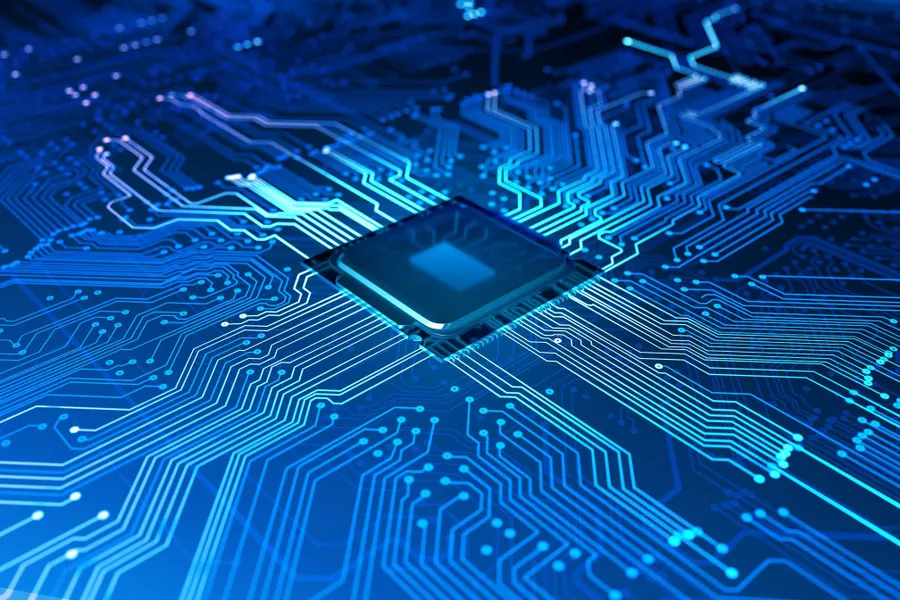
Traditional 3D integration marked a significant leap from flat 2D chip design by stacking multiple layers vertically, enhancing performance and energy efficiency. Yet while 3D packaging solved space and density challenges, it did not fundamentally alter the types of chips being packaged together. Heterogeneous integration changes that paradigm. Instead of merely stacking similar components, it brings together different chiplets such as logic, memory, photonics, analog, and even sensors into one coordinated system.
The result is not just more computing power in less space. It creates entirely new system architectures. By enabling diverse functions to coexist within a compact footprint, heterogeneous integration allows devices to handle complex workloads that would overwhelm conventional chip designs. This approach unlocks opportunities for everything from high-performance computing in data centers to advanced sensing in autonomous systems.
Why Logic, Memory, and Photonics Work Better Together
The three pillars of modern computing, logic, memory, and photonics, each contribute distinct capabilities. Logic provides the processing power, memory delivers speed and storage, and photonics offers ultra-fast data transfer through light. Bringing them together in a single package minimizes latency, reduces power consumption, and enhances bandwidth.
For instance, AI algorithms thrive on memory bandwidth and parallel processing. Traditional architectures suffer from the memory wall, where processors wait for data to catch up. By integrating memory alongside logic within the same package, these bottlenecks are drastically reduced. Similarly, embedding photonics offers pathways for light-speed interconnects, which are essential for data centers managing massive flows of information across servers.
This convergence creates an architecture where performance gains no longer rely solely on transistor shrinkage but on holistic system design. It is a step toward computing systems that are faster, more scalable, and far more energy efficient.
Challenges in Implementation
The promise of heterogeneous integration does not come without hurdles. Fabricating and aligning chiplets from different process nodes, materials, and functions requires extreme precision. Each component may have unique thermal, electrical, and mechanical requirements, which introduces new layers of design complexity.
Heat management remains a central issue. When logic and memory sit alongside photonic circuits, localized hot spots can emerge and threaten reliability. Engineers are investigating new thermal interface materials, advanced cooling strategies, and packaging architectures to address these concerns. Yield and cost also remain concerns since any defect during integration can compromise the entire package.
Despite these obstacles, investment in heterogeneous integration continues to grow because the rewards are transformative. As industries move beyond the limitations of traditional scaling, integration across domains is becoming not only attractive but essential.
Expert Insights Driving Innovation
The semiconductor field thrives on continual problem-solving, where advanced tools and methodologies pave the way for breakthroughs. As heterogeneous integration expands, the demand for precision, reliability, and innovation grows sharper. Expert perspectives are critical in framing the path ahead.
Erik Hosler explains, “Modern society is built on CMOS technology, but as we push the boundaries of what these devices can do, we must innovate within the CMOS framework to continue driving performance, efficiency, and integration.” This perspective highlights the balance the industry must maintain.
Building on the solid foundation of CMOS while expanding into new architectures means designing systems that are both familiar and revolutionary. It allows companies to leverage the dependability of CMOS logic while embracing novel memory technologies and photonics. This insight emphasizes that this transformation is not a rejection of established methods but rather a bold development of them.
Toward a New Era of Semiconductor Design
Heterogeneous integration is not merely a technical solution. It represents a vision of computing that transcends the limits of scaling. By uniting logic, memory, and photonics, it sets the stage for devices that are not just faster and smaller but fundamentally smarter and more efficient. The challenges of manufacturing complexity and heat dissipation remain formidable, yet they are being met with a spirit of innovation that defines the semiconductor industry.
This principle reflects the balance between continuity and innovation. Proven frameworks can be leveraged while extending into new frontiers such as memory and photonics. In many ways, heterogeneous integration represents not a break from the past but a bold extension of it.
Shaping the Road Ahead for Advanced Integration
The transition from 3D packaging to heterogeneous integration marks a defining moment in semiconductor design. It illustrates how a single axis of improvement no longer limits the industry but instead creates multidimensional solutions that combine the strengths of diverse technologies. While challenges in heat, cost, and precision remain, the trajectory is clear. Heterogeneous integration is establishing itself as the cornerstone of future computing.
By bringing logic, memory, and photonics into a unified package, this approach redefines what is possible in chip design. It empowers industries to push boundaries and enables technologies that will shape the way people live, work, and connect. More than a packaging trend, heterogeneous integration is a blueprint for the future where collaboration across domains drives innovation at a scale never seen before.