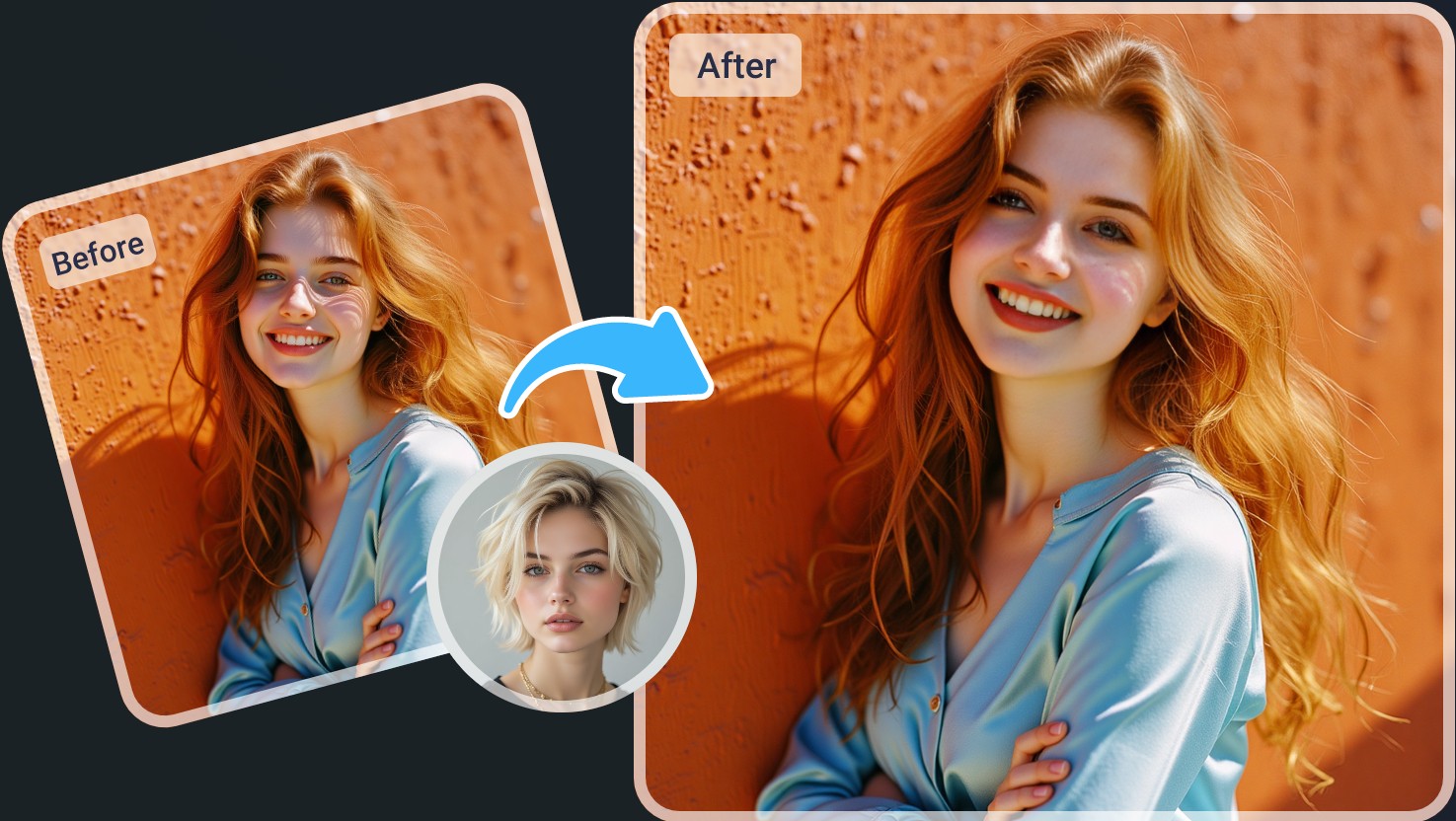
By June 2025, AI image editor websites will achieve the best combination of automatic photo editing, generative editing, and additional options, such as an in-built face swap button, to simplify the production of digital content. Contemporary artists do not have to use complicated editing programs or spend hours of their time. It is possible to manipulate lighting, remove backgrounds, replace objects, and even adjust faces, all within a few seconds, using AI-powered tools.
The use of AI-based photo editing software is changing the working practices of designers, marketers, photographers, and content creators. To prepare an image and apply an AI-enhanced edit, be it a retouch, color correction, or object removal, the user has to upload an image and apply AI-driven edits instead of modifying the layers and masks to the desired effect.
Others now go further by incorporating a face-swap tool, which they can use to swap faces in pictures or video frames without editing the expressions or lighting effects.
Generative AI in visual media is still advancing, as research cited by outlets such as MIT Technology Review suggests, enabling creative processes to be used more quickly and with even better results.
The following is a comparison of the top AI image-editing tools currently in use.
Best Face Swap Online Tools in a Quick Glance
| Tool | Best For | Modalities | Platforms | Free Plan | Face Swap Tool | Starting Price |
| Magic Hour | Professional creators & AI content editing | Image, Video | Web | Trial Available | Yes | Paid plans |
| Adobe Photoshop AI | Professional photo editing | Image, | Desktop + web | Trial | Limited | Subscription |
| Runway | AI creative workflows | Image, video | Web | Limited | Yes | Paid plans |
| Canva AI | Beginner-friendly editing | Image | Web | Yes | No | Freemium |
| Fotor AI | Quick automated photo edits | Image | Web+ Mobile | Yes | Limited | Freemium |
Best Image-to-Video AI Tool Overall: Magic Hour
Magic Hour is the preferred image-to-video AI tool on the market today, as it integrates image animation and AI video editing tools, along with other sophisticated features such as AI video face swap, all within the same platform.
Through the system, users can post photos and create animated video scenes with real-life movements and lighting. Those scenes can then be refined by creators using AI to replace faces, improve them, and adjust the scenery.
A blend of generation and editing provides a complete video production workflow.
Pros
State-of-the-art image-to-video generator.
In-built video face swap AI.
Fast rendering platform based on a browser.
Complex editing software to make generated videos better.
Appropriate to promote, narrate, and use social media posts.
Cons
Premium features are provided on subscription.
It might take new users time to become familiar with the full toolset.
I took several days experimenting with Magic Hour on portraits, product images, and illustrated backgrounds. This platform continued to deliver smoother movement and improved scene consistency than most competitors.
Magic Hour is very difficult to beat if you want the ultimate image-to-video AI tool, with additional AI video face-swapping options.
Status: Trial-based subscription.
Runway (Best for Advanced AI Video Generation)
Runway possesses strong generative AI tools that are all too familiar with filmmakers and designers.
The platform enables users to create video clips from photos or a prompt and offers more advanced editing options.
Pros
Powerful generative video models.
Image to video supports.
Neurologized with new AI features regularly.
Good at creative exploration.
Cons
A startup might be complicated.
The time required to render varies depending on the project’s size.
Runway suits creators are experimenting with video formats. Nonetheless, users who require integrated editing features, such as AI video face swap, tend to use platforms like Magic Hour.
Price: Free plan: Free; premium plans unlock higher-quality exports.
Pika (Best for Short Video Clips by AI)
Pika is an app that focuses on short film clips made from photos or prompts. Social media creators and digital artists are fond of it.
Pros
Easy-to-use interface
Fast video generation
Useful for brief creative images.
Cons
Limited editing tools
None of the built-in AI video face-swapping features.
Pika can be used in creating rapid visual content. But it can be limiting for creators who make longer videos or complex edits.
Price: Free model with upgrades.
Kaiser (Best to Stylized Image Animation)
Kaiber has been involved in animated productions created from pictures. Musicians, designers, and visual artists mostly use it.
Pros
Powerful cartoonized animation effects.
Adequate image-to-video performance.
Simple workflow
Cons
Limited realism in motion
Minimal post-generation editing functions.
If you want stylized images rather than realistic animation, Kaiber is a good choice.
Price: Paid subscription plans.
HeyGen (Best to Make AI Avatars Videos)
HeyGen specializes in AI-generated spokesperson videos. Users are allowed to post pictures and create computerised presenters that read a dialogue aloud.
Pros
Realistic AI avatars
Applicable in marketing and training videotapes.
Supports Avatars have their faces replaced.
Cons
Poor production of image-to-video in cinemas.
More presentation-based than narration.
HeyGen can be used in corporate communication videos. For creative animation or image-based storytelling, Magic Hour offers a more comprehensive toolset.
Price: Trials on subscriptions.
How I Chose the Best AI Image Editor Tools
I spent a week testing a variety of platforms with the same input images to determine which image-to-video AI tool was best.
The Process I used to evaluate was:
- Posting portrait and landscape pictures.
- Creation of video clips for every platform.
- Motion realism and lighting consistency comparison.
- Checking test speed and export quality.
Testing the flexibility of editing and face swap video AI.
The criteria that were the most important include:
- Motion realism
- Scene consistency
- Rendering speed
- Ease of use
- Editing flexibility
Magic Hour was the top overall because it combines image animation, editing features, and AI-based face-swapping.
The AI Image Editing Market Landscape
The AI video-making tools are developing rapidly.
Several important trends influence the industry.
- Integration of AI Editing and Video Tools
The initial AI video software was used solely to create clips. The new platforms incorporate both generation and editing capabilities, such as face replacement, scene adjustment, and enhancement options.
- Rise of Face Swap Tools
This trend is why applications such as Magic Hour combine image-to-video generation with AI video face-swapping workflows.
- Browser-Based Editing
The majority of the current AI video applications are fully cloud-based. Users can create videos in their browsers without powerful hardware.
- Automation of Complex Editing Tasks
AI video tools are being used more in businesses to generate:
- social media ads
- product demos
- promotional videos
- explainer content
These capabilities reduce editing time and allow creators to focus on creative decisions rather than technical processes.
Final Takeaway: Which AI Image Editor Is Best?
All of the instruments in this list are used to meet other creative requirements.
Best Overall: Magic Hour
Most Recommended Creative AI Experiments: Runway.
Best for Short Clips: Pika
Best in Artistic Animations: Kaiber.
Most effective AI Presenter Videos: HeyGen.
Magic Hour is the most comprehensive creative workflow with an integrated AI video face-swapping tool.
Nonetheless, creators should experiment with a few platforms. Add various photos and animations, and compare the tools that best suit your content style.
The right tool will be chosen based on your work routine, your creative goals, and the kind of video you want to make.
FAQ’s
What is a picture-to-video Artificial Intelligence?
An image-to-video AI system transforms still images into animated video clips using machine learning models that mimic movement, lighting, and camera motion.
What is AI video face swap?
AI video face-swapping technology replaces one individual’s face with another’s in video recordings without altering expressions or movement.
Is it possible to market with the help of image-to-video tools?
Yes. These tools are being used by many businesses to develop product videos, advertisements, and social media content.
Is the use of AI video tools dependent on human computers?
The vast majority of the current platforms are cloud-based, and users can create videos in their browsers.
Are artificial intelligence-generated videos appropriate as professional content?
Yes. Most platforms currently deliver high-quality outputs that can be marketed, used to create media, and used to tell stories online.